Seaside apartment, P12
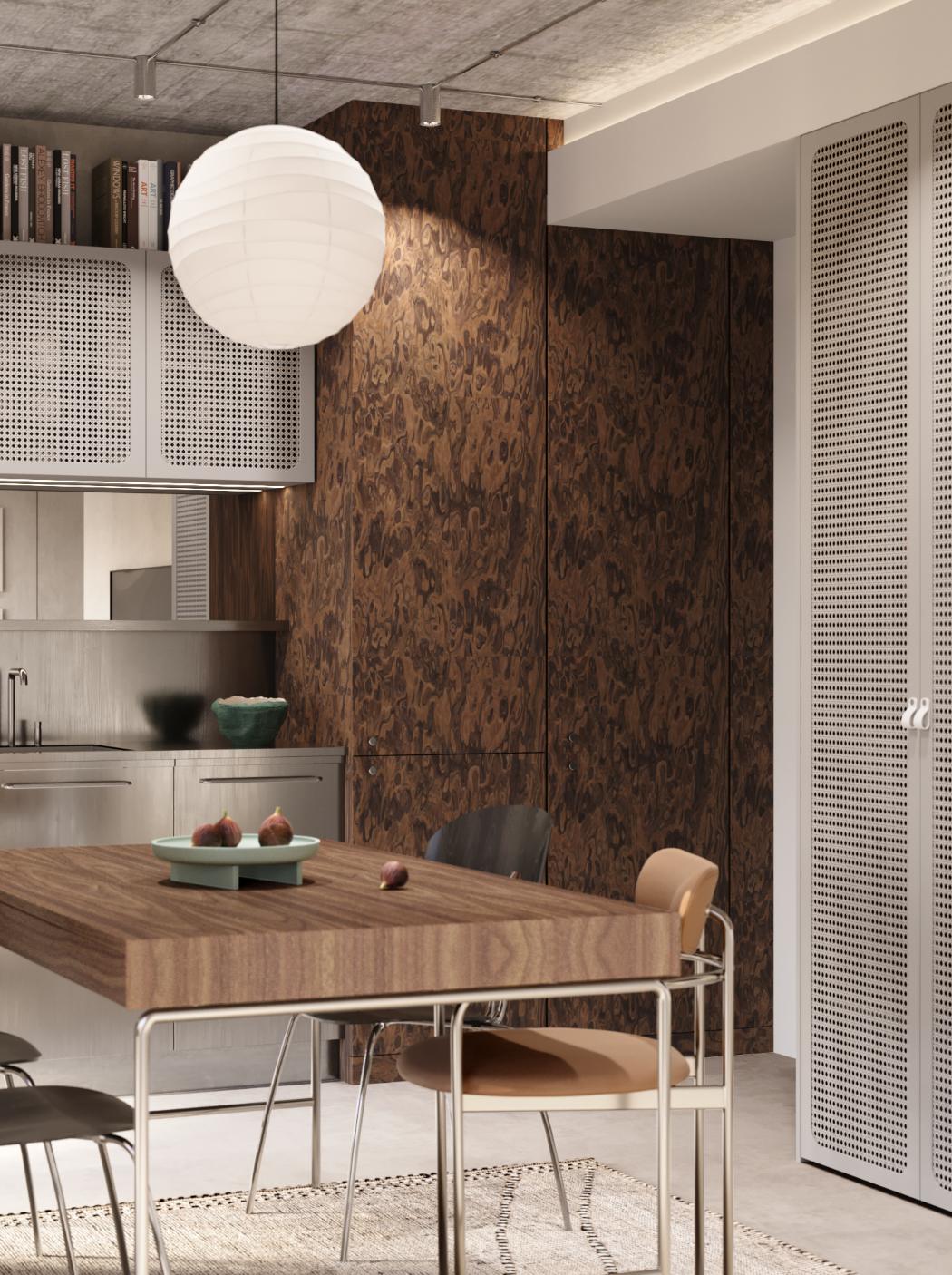
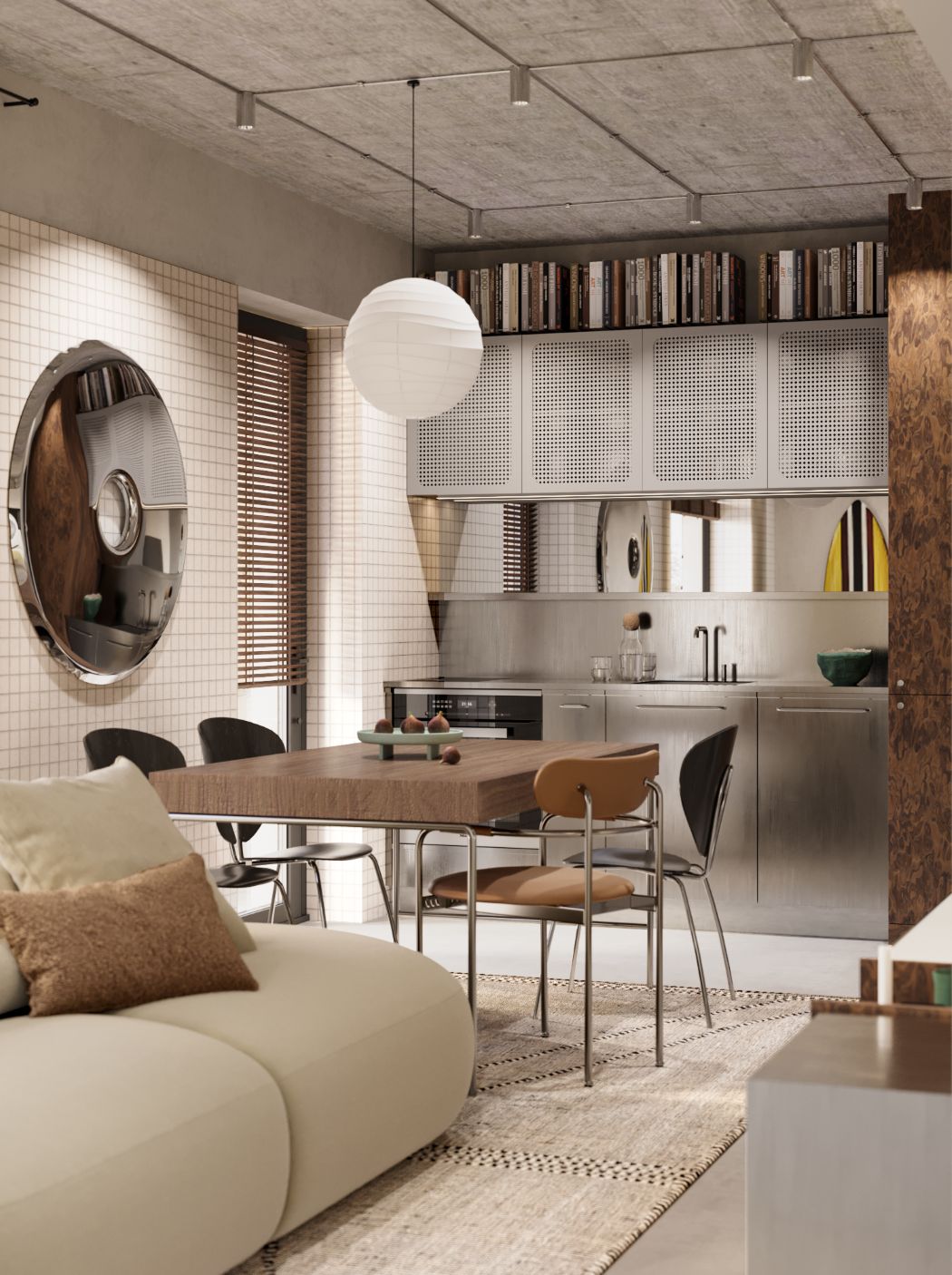
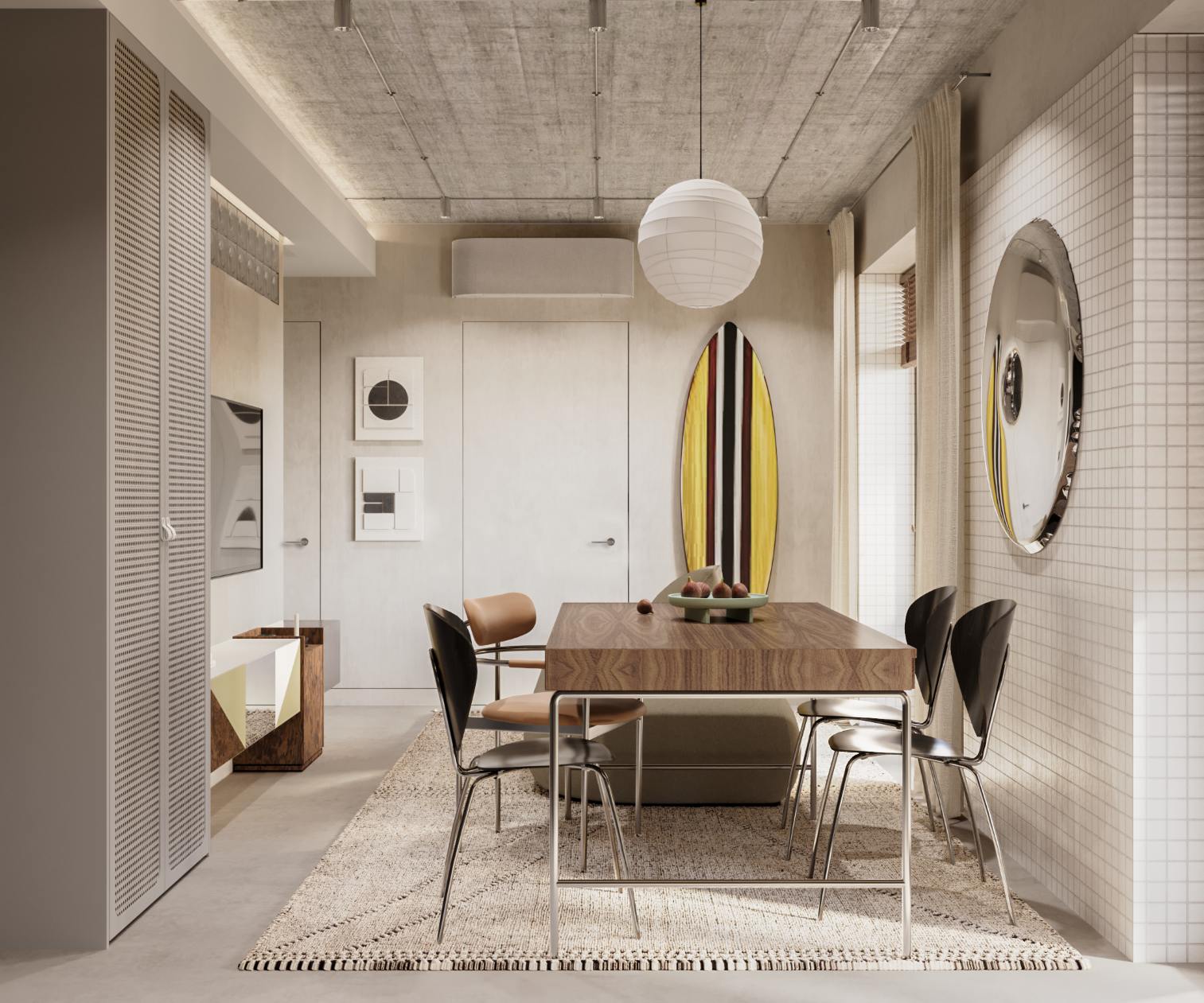
Some interiors begin with a plan. This one began with friction. Located in Pervalka — a remote village on Lithuania’s Curonian Spit — this apartment doesn’t echo what’s usually expected from a home by the sea. Creativity here is grounded in material: concrete, steel, burl veneer, mirror, terrazzo. Each surface was chosen not to impress, but to invite touch. Not to match, but to respond. Colors are muted — but not passive. Think driftwood, fog, sun-aged metal. Light moves across each texture with intention.
| Project name | Seaside apartment, P12 |
| Typology | Residential Interior Design |
| Location | Lithuania |
| Area | 40 m2 |
| Year | 2025 |
| Status | Ongoing |
| Design | Rosita Butkyte |
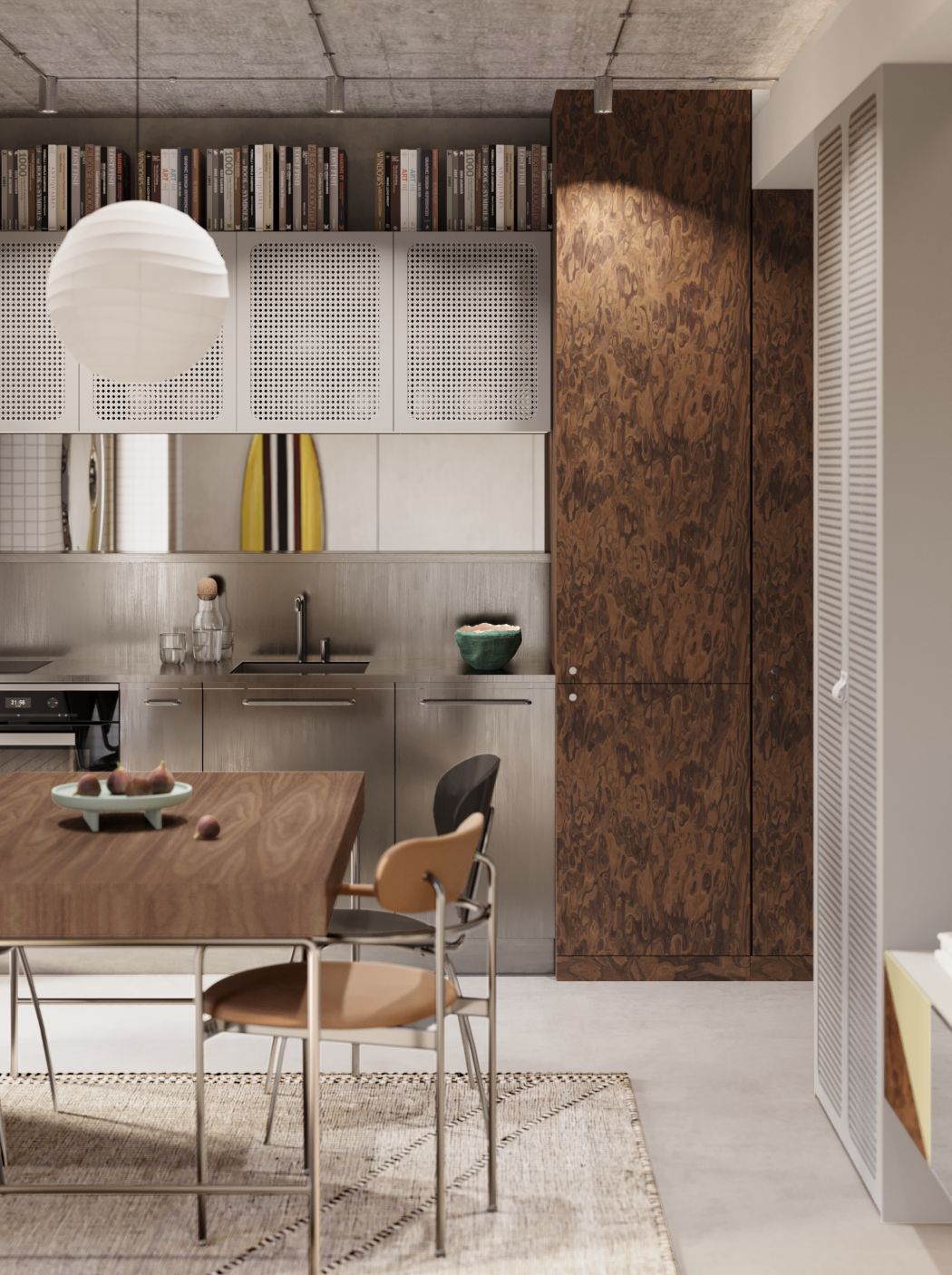
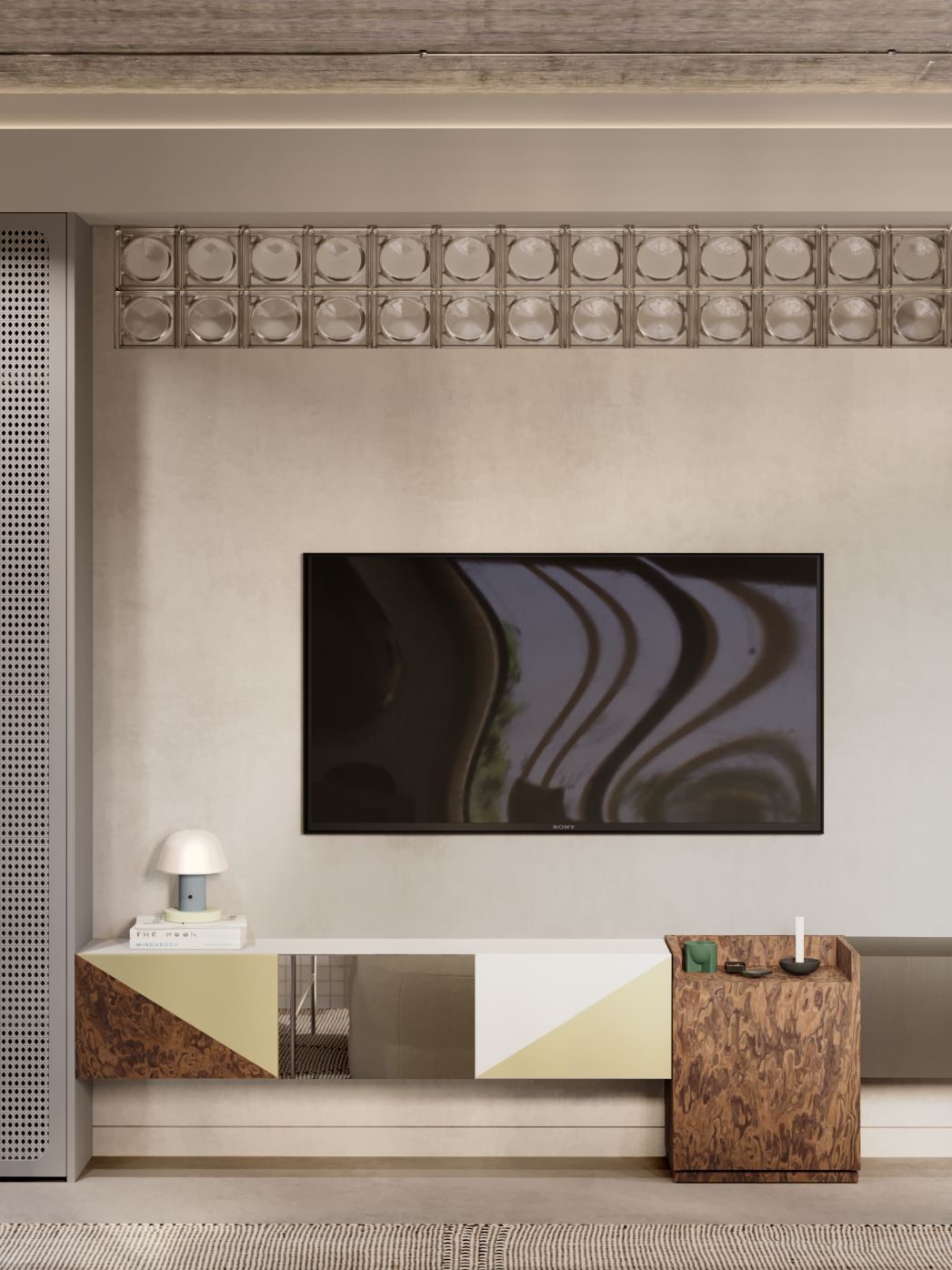
There’s no white-on-white calm. No sun-bleached minimalism. No silence for the sake of serenity. Instead, it embraces contrast. It celebrates texture. It was designed not to dissolve into the background — but to spark something.
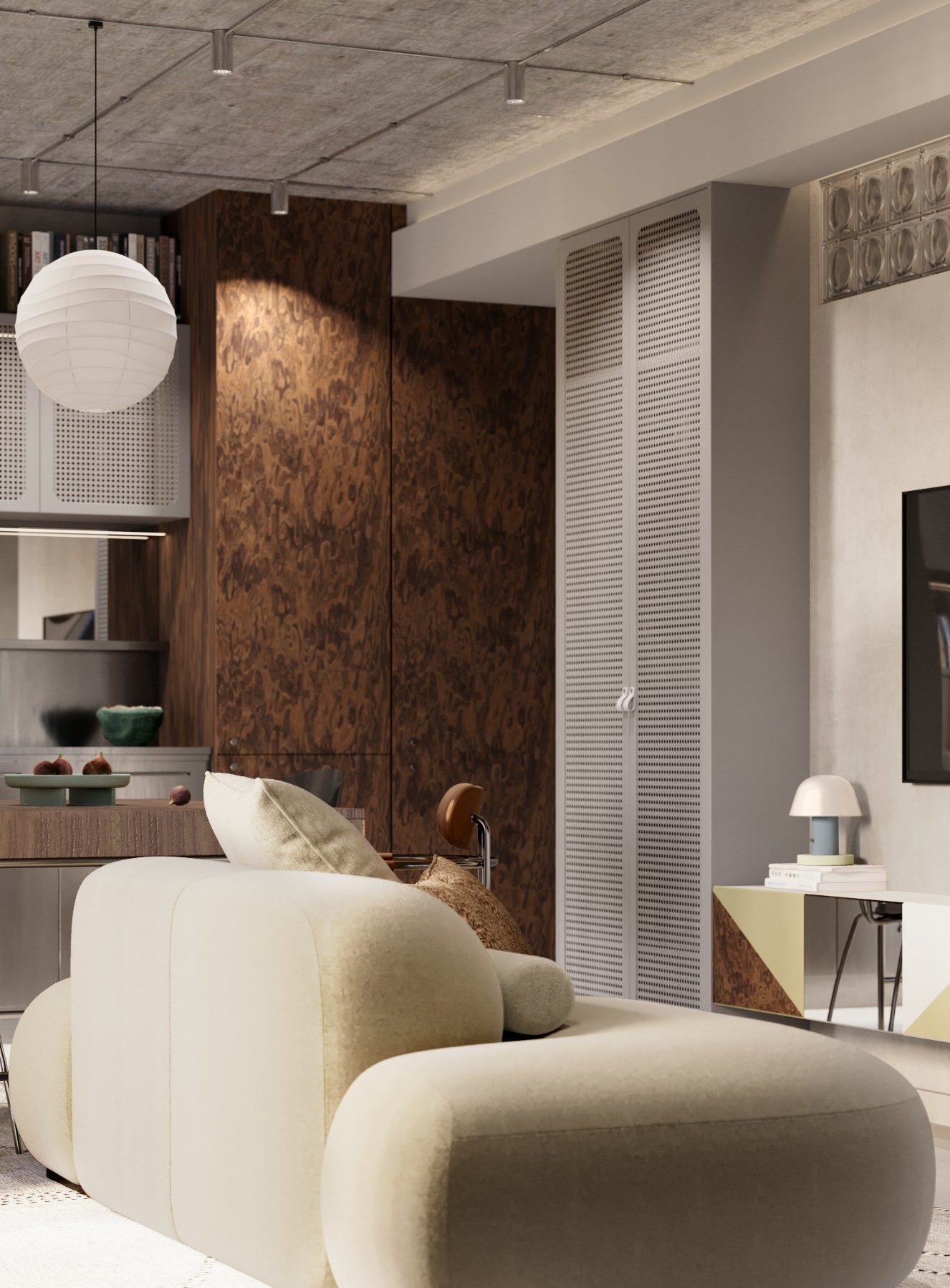
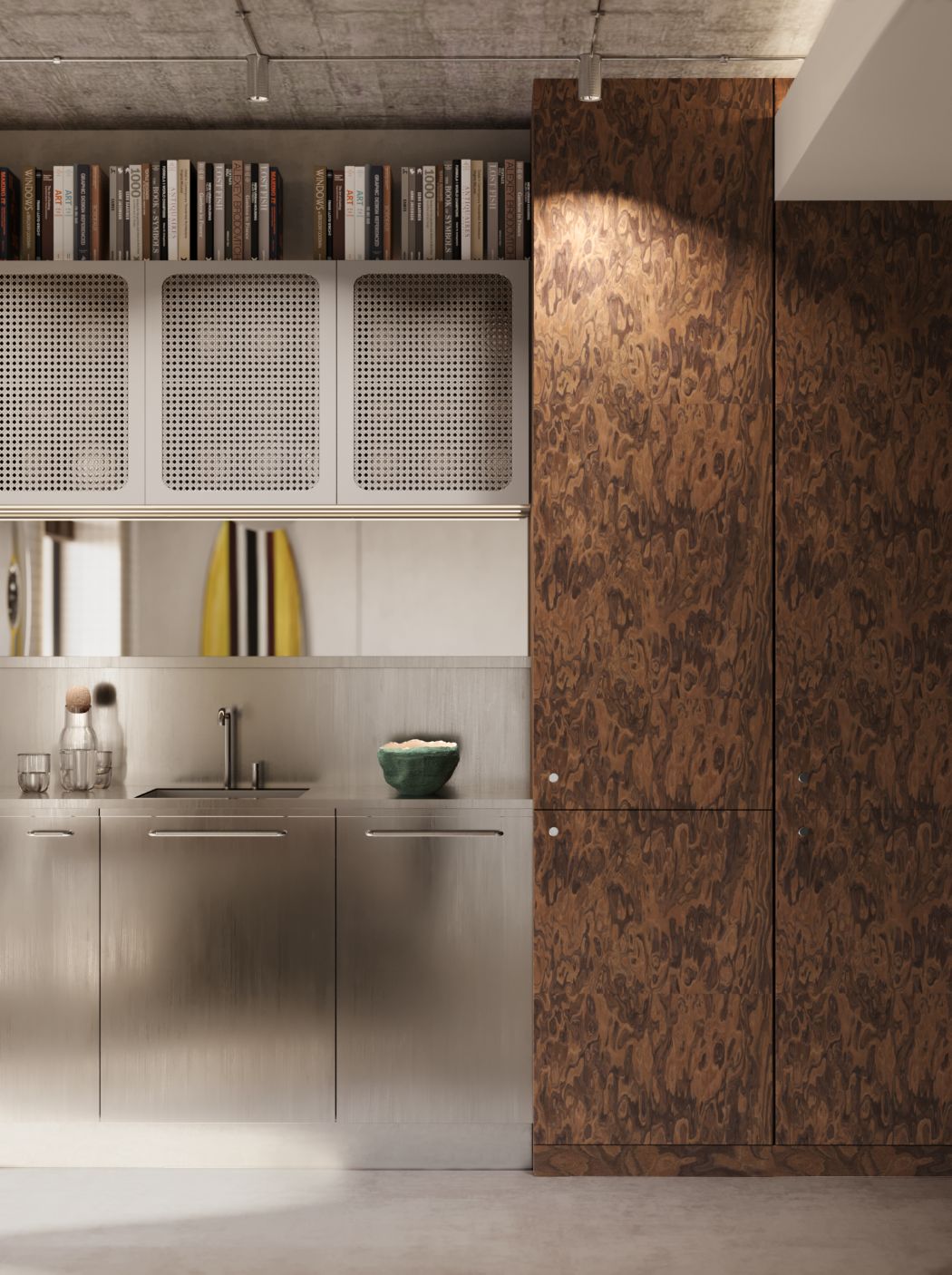
The apartment is compact, but refuses to feel limited.
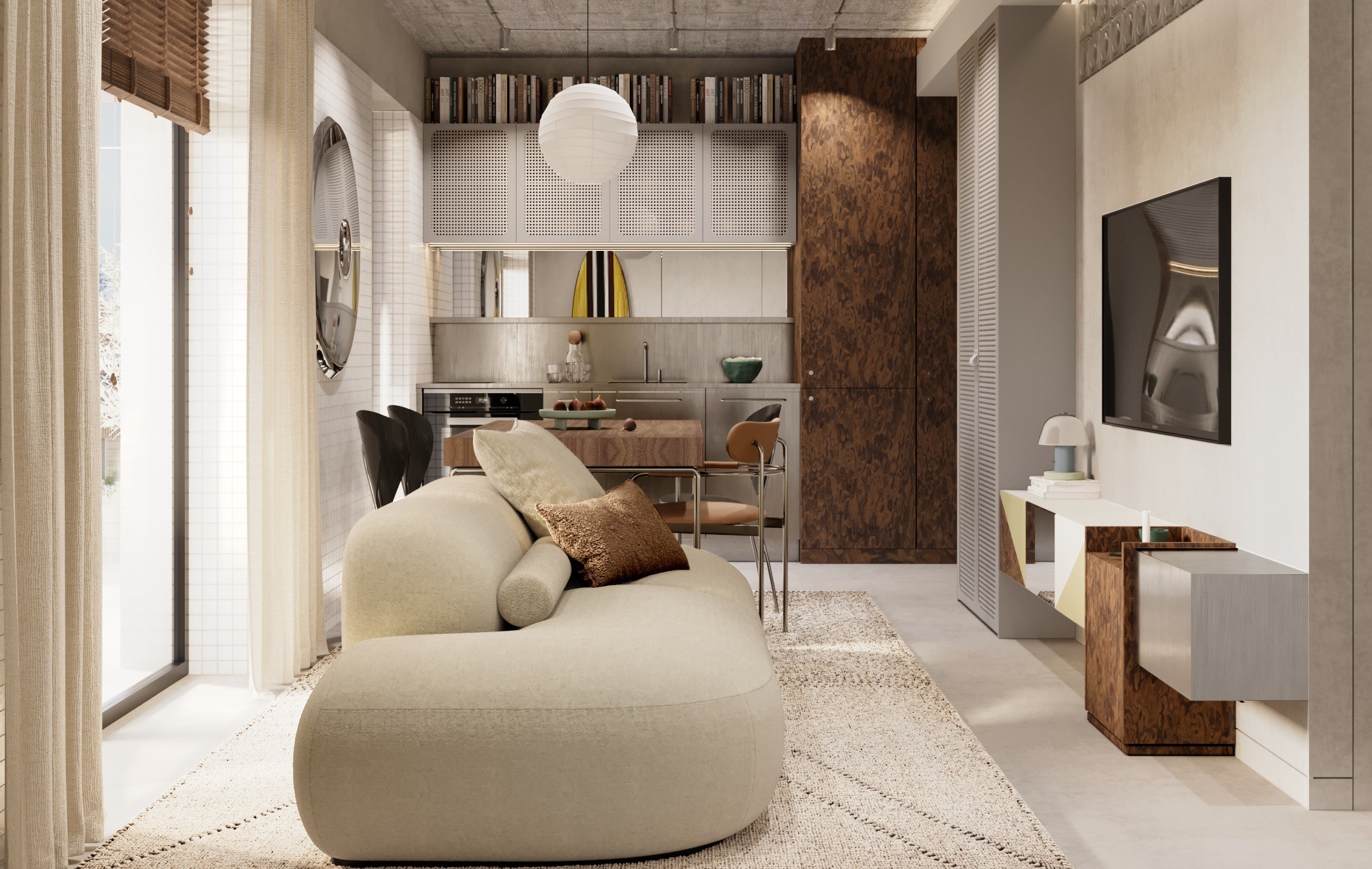
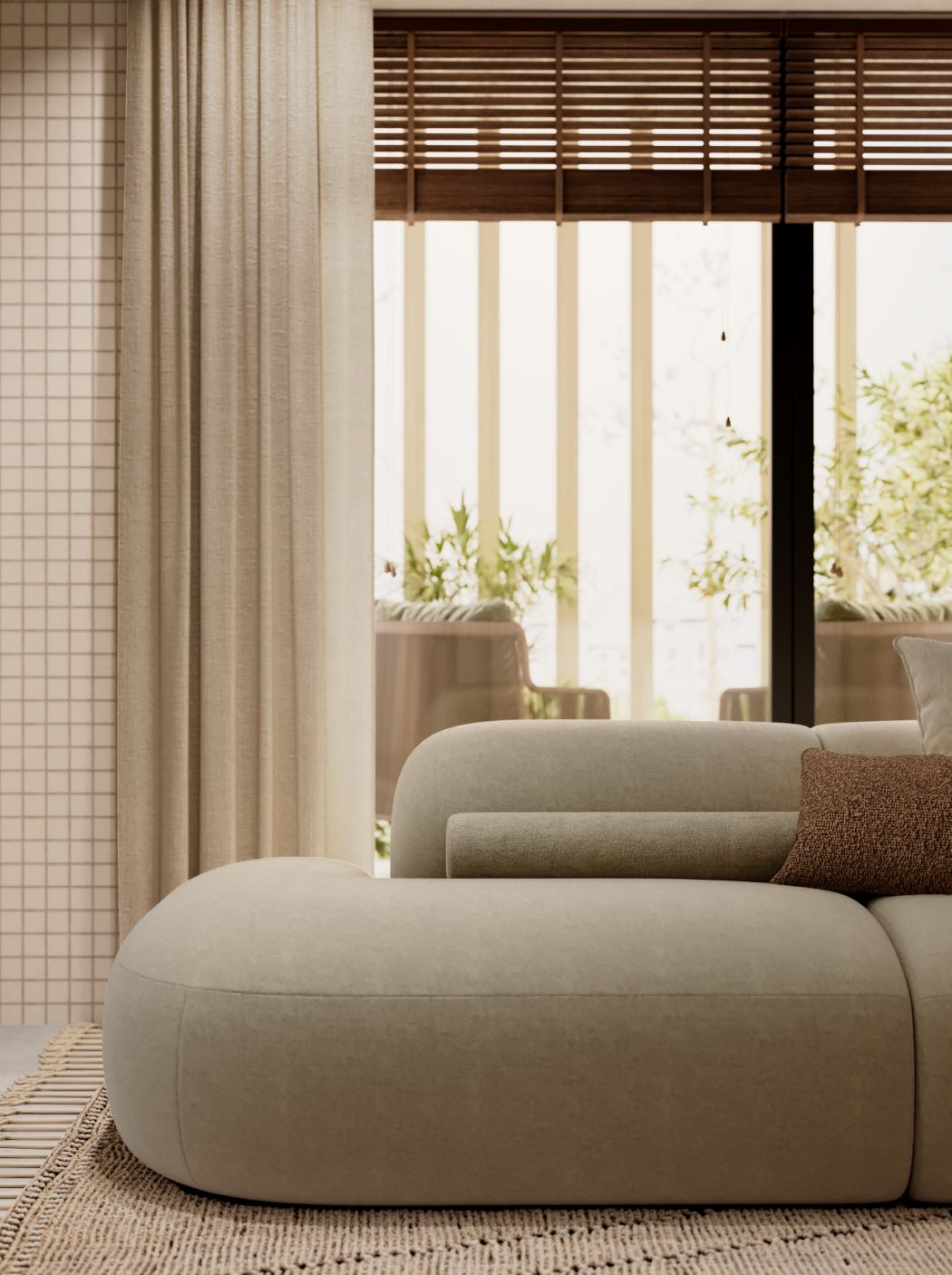
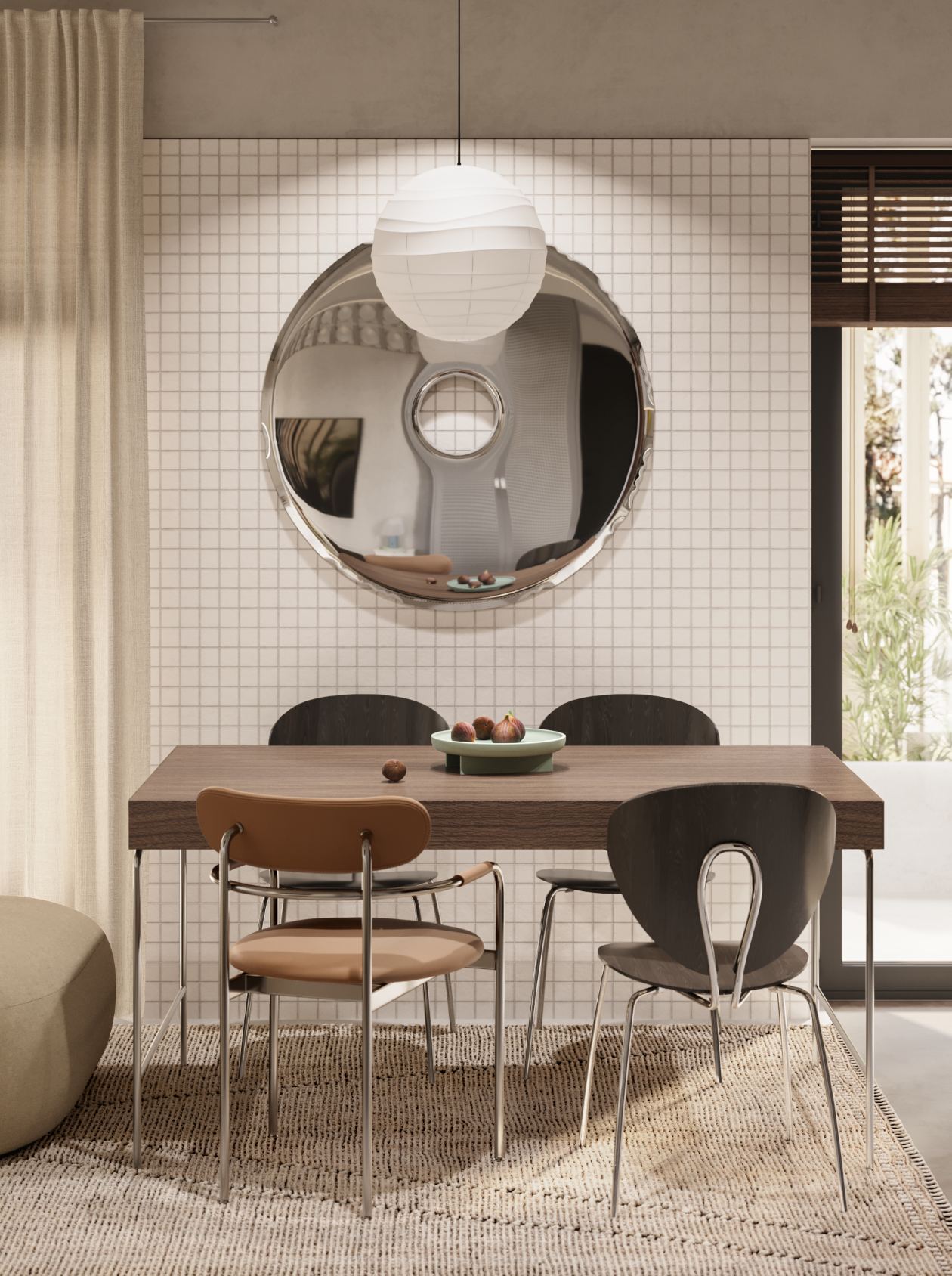
Large windows expand the space beyond its square meters. The layout doesn’t dominate — it flows. The mirrored backsplash expands volume without spectacle. A single round mirror softens the grid — a visual interruption that never asks for attention. One element of the apartment traces its roots to the coastline itself. The vėtrungė — a coded wooden sign once mounted on fishing boats across the Curonian Spit — served both as orientation and identity. Its rhythm of slats, cuts and forms informed the language of the TV console, and more quietly, the space’s geometry. The reference is not obvious — but it’s there.
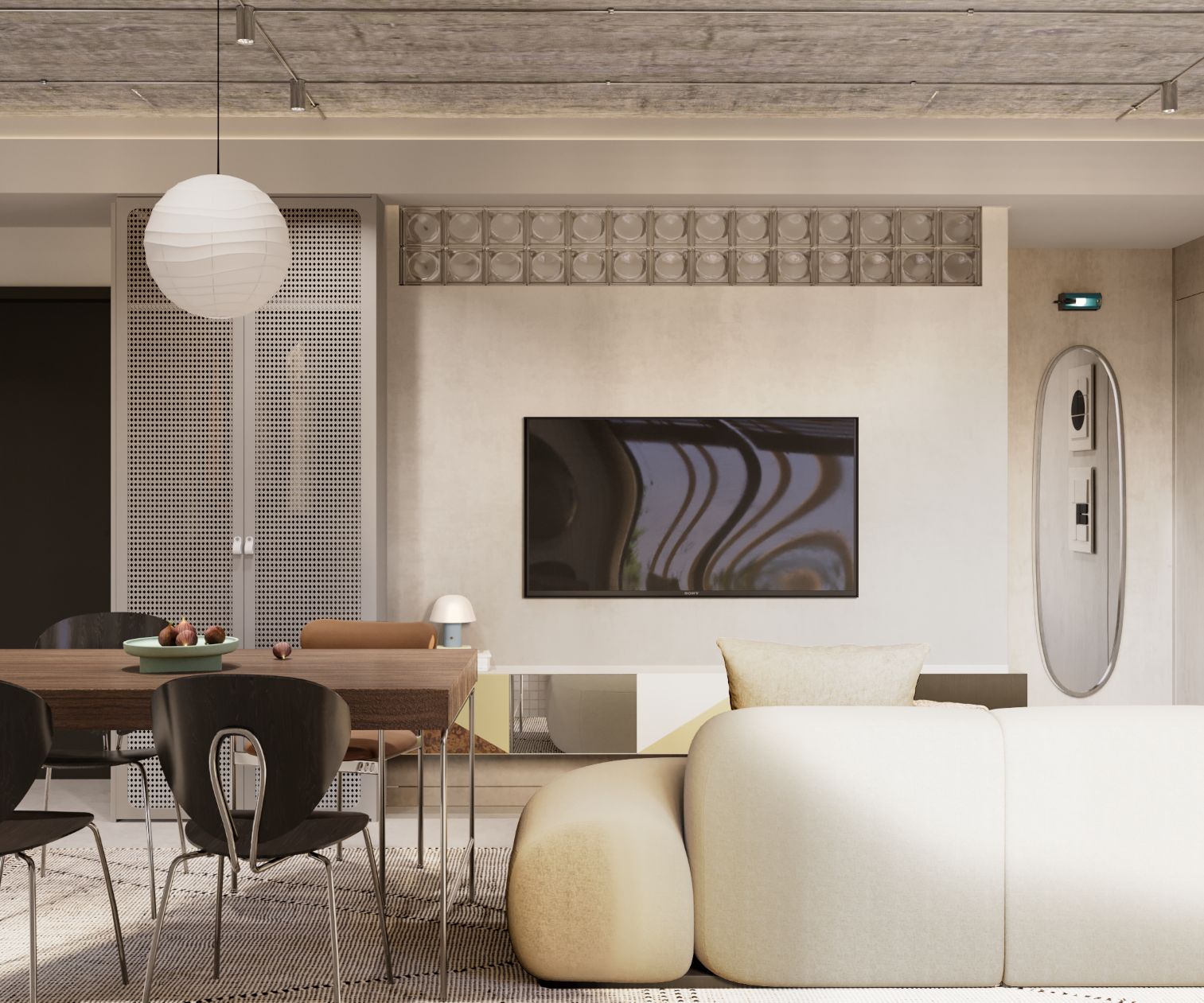

At the heart: a dining table.
Solid, simple, present. It holds the space together — socially and spatially. Around it, chairs that misalign but somehow agree. A plush sofa curves around the edge of the room like punctuation.
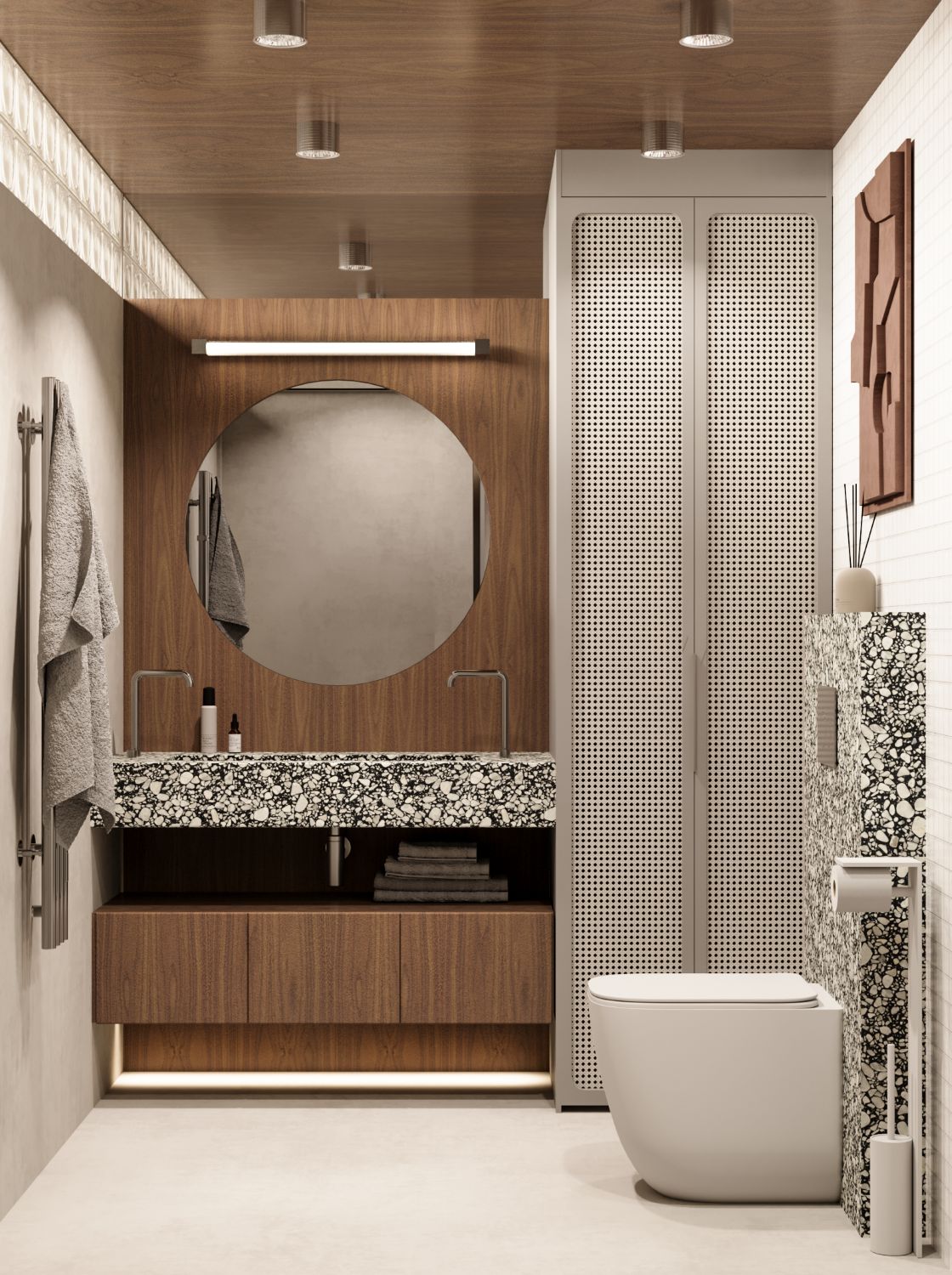
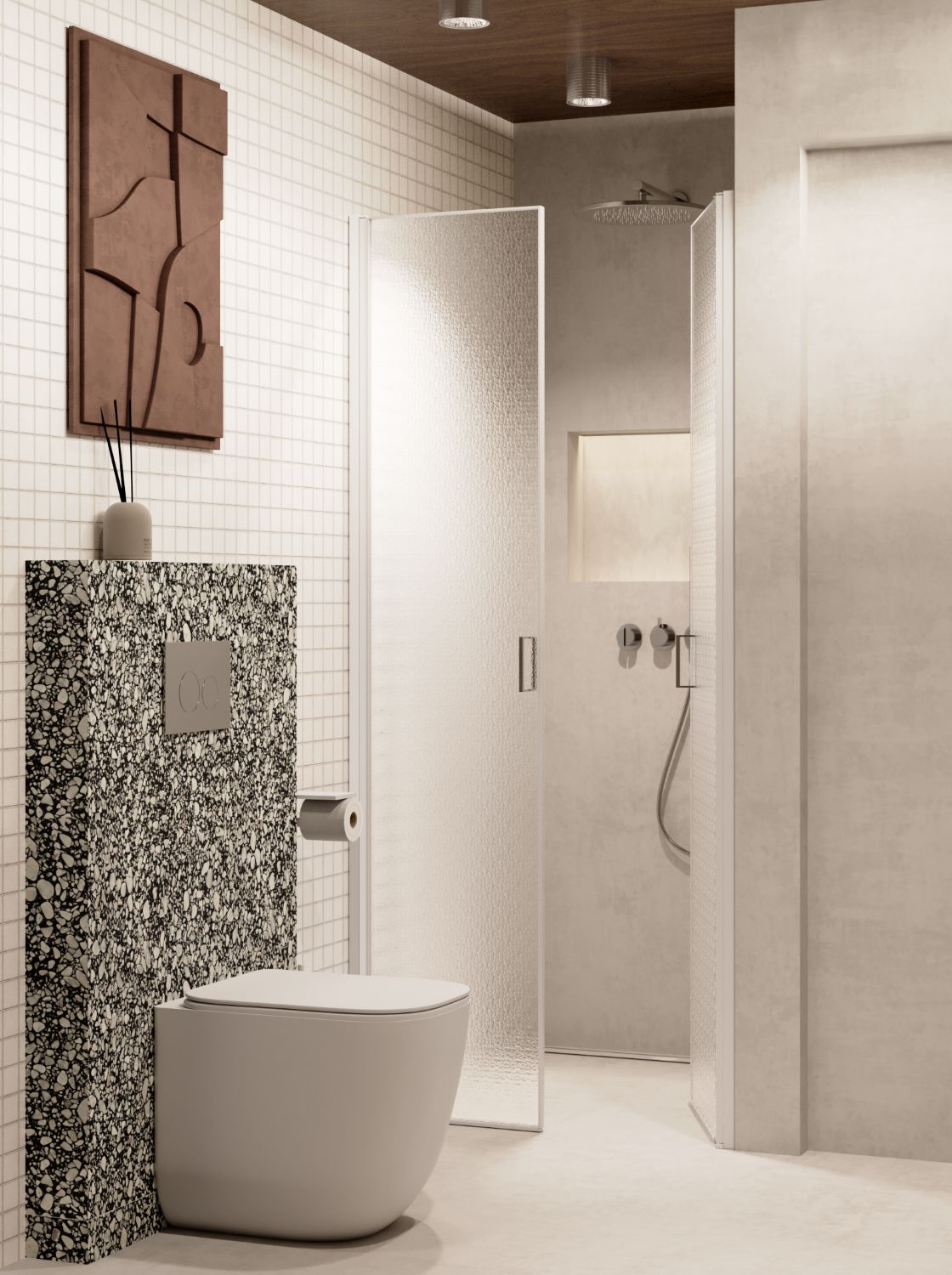
In the bathroom, the material rhythm continues.
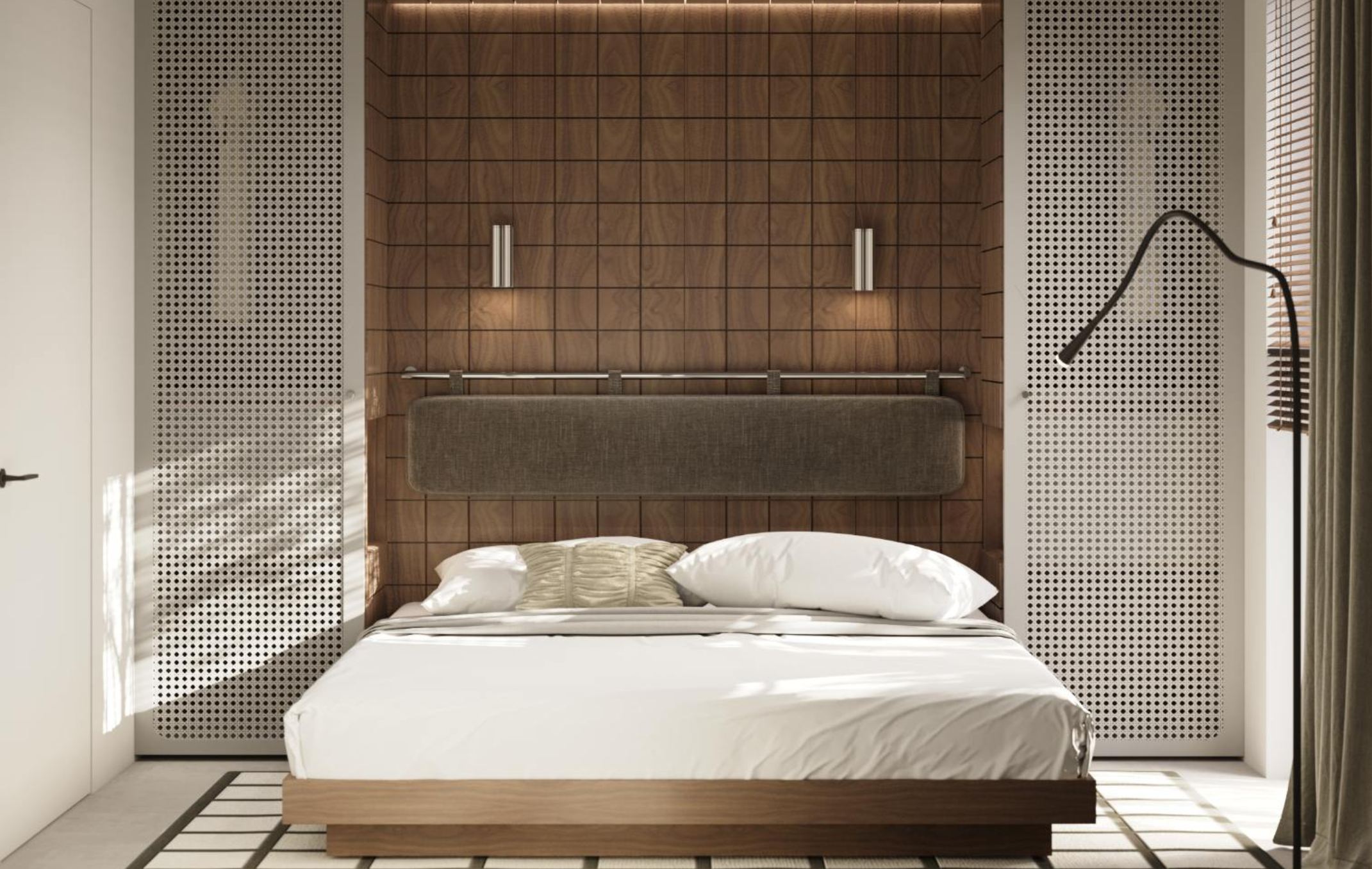
Terrazzo grounds the space. Oak warms it. A circular mirror reappears — not copied, but remembered. Fixtures in stainless steel shift expectations, as do the deliberate seams and exposed tile grids. In the bedrooms, the geometry holds still. Warm wood panels soften the walls. A narrow light glows just enough to suggest a line you might read in the dark. One detail is left unexplained. It’s there to be sensed — not solved.